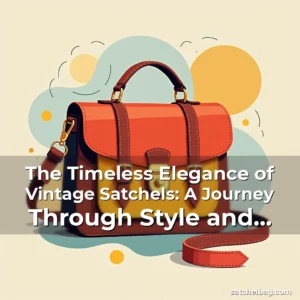

The Timeless Elegance of Vintage Satchels: A Journey Through History and Craftsmanship
Vintage satchels have long been revered as symbols of sophistication, durability, and timeless style. These handcrafted bags carry not only practicality but also rich historical significance, making them coveted pieces among collectors and fashion enthusiasts alike.
With their distinctive designs and high-quality materials, vintage satchels offer an unparalleled blend of functionality and elegance that modern counterparts often struggle to replicate. Their enduring appeal lies in both their aesthetic charm and the stories they tell through decades of use.
A Historical Perspective on Vintage Satchels
Dating back to the late 19th century, vintage satchels were initially designed as functional accessories for students, professionals, and travelers who required reliable storage solutions during their daily routines.
The term “satchel” itself originates from the French word “sac,” meaning bag, which highlights its utilitarian roots before evolving into a symbol of status and refinement over time.
In the early days, these satchels were typically made using leather sourced from local tanneries, ensuring durability while allowing artisans to incorporate intricate stitching techniques passed down through generations.
As industrialization advanced, manufacturers began employing mass production methods that significantly increased accessibility without compromising quality standards set by traditional craftsmanship.
- Material Evolution: Early models relied heavily on natural leathers such as calfskin or full-grain cowhide, known for their resilience against wear and tear.
- Design Adaptations: Over time, designers introduced new features including adjustable straps, reinforced corners, and compartmentalized interiors tailored towards various user needs.
The Artistry Behind Crafting Vintage Satchels
Crafting a vintage satchel involves meticulous attention to detail at every stage—from selecting premium raw materials to executing precise sewing patterns.
Artisans would carefully choose each piece of leather based on grain texture, color consistency, and overall thickness, ensuring optimal performance across different environmental conditions.
The cutting process requires extreme precision; even minor deviations could compromise structural integrity or alter intended aesthetics dramatically.
Once cut, individual panels are then assembled manually using either saddle stitch or flat-felled seams—both renowned for providing exceptional strength compared to machine-sewn alternatives.
Traditional Techniques vs Modern Methods
Historically, most satchel makers utilized hand-stitched construction techniques due largely to limitations imposed by contemporary technology.
This method allowed craftsmen greater control over tension levels applied during stitching operations, resulting in stronger bonds between fabric layers.
However, recent advancements have enabled some producers to integrate semi-automatic tools alongside manual labor without sacrificing authenticity or quality assurance benchmarks established centuries ago.
Despite these innovations, purists still prefer entirely handmade items because they believe this approach better preserves original design intent while honoring ancestral skills developed over many years.
Identifying Authentic Vintage Satchels
Recognizing genuine vintage satchels can sometimes feel daunting given today’s influx of replica products claiming heritage credentials falsely.
To distinguish authentic specimens from imitations, potential buyers should pay close attention to specific markers indicative of true antiquity rather than mere imitation efforts.
One key indicator is the presence of aged patina—an organic discoloration caused naturally through prolonged exposure to elements like sunlight, moisture, and frequent handling.
Fake versions usually exhibit artificial distressing treatments meant solely for visual impact instead of actual degradation experienced by real antique goods.
- Hardware Inspection: Original hardware components tend to show signs of oxidation around edges where metal meets leather surfaces regularly.
- Stitch Quality Check: Genuine vintage stitching follows consistent spacing patterns along seam lines whereas counterfeit versions may appear unevenly spaced or loosely attached.
Popular Eras and Styles of Vintage Satchels
Vintage satchels span numerous eras characterized uniquely by prevailing cultural trends influencing shape preferences and material choices available during those periods.
For instance, Edwardian-era (early 20th century) satchels favored streamlined silhouettes emphasizing simplicity yet maintaining robustness suitable for academic settings.
Mid-century modernist influences led toward minimalist approaches incorporating bold geometric forms paired with lightweight synthetic fabrics becoming increasingly popular post-war.
Late 20th-century iterations embraced eclectic mixtures blending traditional elements with experimental textures reflecting broader societal shifts toward self-expression through personal belongings.
Notable Designers and Brands Associated With Vintage Satchels
Sewing House & Co., founded in London during the 1960s, became synonymous with producing exquisite leather goods featuring distinctive diamond quilting patterns.
Goyard remains another legendary name associated primarily with striped canvas tote bags though occasionally ventures into bespoke leatherwork territory showcasing remarkable artistry worthy of admiration.
Hermès Birkin bag lineage traces back further into pre-WWII France when it was originally conceived as a luxury item exclusively reserved for aristocratic clientele seeking exclusive access beyond common market offerings.
Each brand contributes distinctively to shaping what we now recognize collectively under umbrella terminology encompassing “vintage satchels”—a testament highlighting diverse creative expressions spanning continents and centuries alike.
Collectibility Factors Influencing Value Assessment
Assessing collectible value for any given vintage satchel necessitates considering several interrelated factors determining desirability within current markets targeting niche audiences preferring curated selections over mainstream availability options.
Rarity plays a crucial role since limited production runs inherently elevate scarcity levels thereby increasing demand proportionately amongst discerning consumers willing to invest substantial sums acquiring rare finds.
Condition assessment becomes equally vital especially regarding intactness concerning original finishes, absence of damage indicators suggesting improper maintenance practices might have compromised longevity expectations.
Provenance documentation adds additional weightage particularly when verifiable histories confirm direct links connecting particular units back to notable individuals whose associations enhance perceived worthiness considerably.
- Brand Reputation: Established names command higher prices simply because reputation acts as implicit guarantee assuring superior build quality irrespective of age-related deterioration effects.
- Unique Features: Special edition releases containing exclusive embellishments or signature monogramming create added allure attracting serious investors looking beyond basic utility functions.
Prominent Markets Where Vintage Satchels Are Traded
Global interest continues growing steadily year after year fueling active participation across multiple platforms catering specifically to aficionados dedicated wholly unto this pursuit involving careful curation processes.
Online auction sites like eBay serve dual purposes functioning simultaneously both as repositories housing vast inventories alongside competitive bidding mechanisms facilitating price discovery exercises beneficial for informed decision-making.
Specialty boutiques focusing strictly upon curatorial expertise maintain strict inventory controls ensuring exclusivity maintained consistently across seasonal changes affecting consumer behavior patterns globally.
Additionally, international trade fairs held periodically attract global participants representing varied backgrounds ranging from independent dealers selling personally owned collections up through corporate entities managing extensive private holdings requiring specialized logistics support infrastructure.
Tips For Maintaining And Preserving Your Vintage Satchel
Preservation strategies play critical roles safeguarding investments placed upon acquiring historically significant artifacts possessing inherent vulnerabilities susceptible to external threats posed by neglectful treatment practices.
Regular cleaning procedures utilizing mild soap diluted appropriately helps remove surface contaminants preventing accumulation leading potentially harmful chemical reactions damaging delicate fibers composing primary structures responsible sustaining form stability overtime.
Applying protective coatings selectively chosen according to manufacturer recommendations ensures enhanced resistance capabilities against staining agents commonly encountered during everyday usage scenarios.
Storage environments must remain controlled ideally kept away from sources emitting excessive heat radiation capable causing irreversible deformation issues manifesting visibly through warping distortions altering original dimensions permanently.
- Humidity Control: Maintaining stable humidity levels prevents mold growth which could otherwise lead catastrophic failures threatening entire contents housed inside vulnerable compartments lacking adequate sealing mechanisms.
- Periodic Inspection: Routine checks allow early detection identifying developing weaknesses before progressing irreparably beyond salvageable thresholds requiring professional intervention services costing substantially more than preventive measures implemented proactively beforehand.
Eco-Friendly Considerations In Owning Vintage Satchels
Beyond financial aspects related purely towards investment returns derived from appreciating values attributed mainly due to rarity characteristics defining collectible categories governed by fluctuating supply-demand dynamics constantly shifting depending upon macroeconomic fluctuations impacting disposable income allocations directed specifically toward discretionary purchases.
Environmental consciousness has become increasingly prominent prompting reconsideration evaluating sustainability implications tied directly with acquisition decisions involving tangible assets requiring physical resources extracted from finite planetary reserves subjected inevitably toward depletion rates exceeding replenishment capacities ultimately resulting net negative ecological balances detrimental long-term prospects concerning future generations inheriting consequences arising from present-day consumption habits.
Vintage satchels represent sustainable choices contributing positively towards reducing waste generated through fast-fashion industries promoting disposable culture encouraging continuous replacement cycles accelerating resource exhaustion timelines exponentially surpassing regenerative abilities nature possesses naturally occurring systems inherently designed balancing ecosystems effectively maintaining equilibrium states preserving biodiversity essential supporting life continuities dependent upon healthy habitats existing currently undisturbed except when human interference disrupts such harmonious relationships.
By choosing vintage pieces, owners actively participate in circular economy principles extending product lifespans minimizing landfill contributions while simultaneously respecting artisanal traditions rooted deeply within communities valuing craftsmanship above fleeting trends dictated solely by commercial interests prioritizing profit margins over ethical considerations regarding social responsibilities owed towards planet Earth shared universally among all inhabitants regardless geographical locations occupied individually.
Conclusion
Vintage satchels encapsulate much more than mere luggage—they embody history, artisanship, and identity intertwined seamlessly together forming cohesive narratives expressing collective memories preserved physically manifested concretely through durable objects carrying emotional resonance transcending temporal boundaries separating past experiences from present realities coexisting contemporaneously within same spatial contexts.
Whether you’re drawn to their storied past or appreciate the unmatched quality of handcrafted leather, investing in a vintage satchel offers a meaningful way to connect with legacy while enjoying a timeless accessory that stands apart from mass-produced alternatives.